RSU
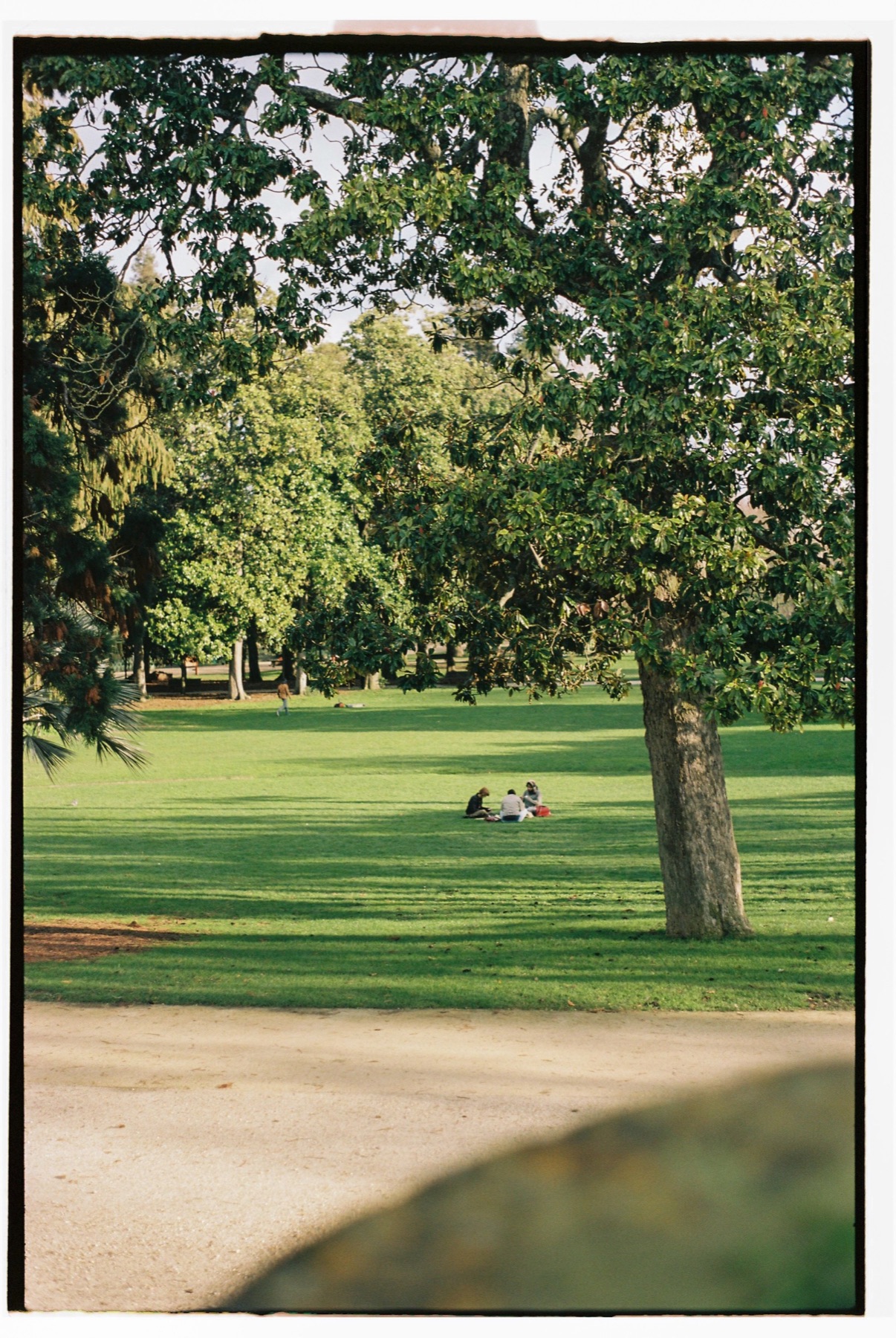
A small group sits together at a distance in a broad public park.

The Space Between Us · Publication 01 · James 1:19–27

The Space
Between Us

What we do in the gap reveals our faith

Begin reading

An invitation

Every relationship has a gap.

There is a space between what we intended and what another person experienced. Between what we expected and what actually happened. Between the way things are and the way we still hope they might become.

The church lives in a gap too: between the brokenness of the present world and the new creation Jesus has promised. N. T. Wright has described the church as a small, working model of that new creation—a community learning now the kind of life God intends for everything.

That is a beautiful vision. It is also where the difficulty begins. Because life together brings us close enough to disappoint one another. It reveals our assumptions, our impatience, our need to be understood, and the distance between what we believe and how we behave when a relationship becomes strained.

The space between us is not empty. It is where our formation becomes visible.

James writes to believers living under pressure and asks a direct question: What does faith produce in a real life, among real people, when the gap opens?

A note of gratitude The phrase “our life together” carries a deliberate echo of Dietrich Bonhoeffer, whose work reminds the church that Christian community is both a gift we receive and a demanding practice we enter.

The Gap We FeelThe Gap We MismanageThe Gap We Close

01 · The Gap We Feel · James 1:19–20

Listen
First

What do I do with anger before it decides what I become?

Quick to listen

Anger may be understandable. It is not a guide.

James does not write as a distant theorist. He grew up beside Jesus and still struggled to understand him. Only after encountering the risen Christ did James become a leader in the Jerusalem church. He knew there could be a distance between seeing Jesus clearly and allowing Jesus to reshape your life.

So James begins with posture: “Everyone should be quick to listen, slow to speak and slow to become angry.” He does not tell us never to feel anger. Anger can identify something true—an injustice, a betrayal, a crossed boundary, or a good thing that has been harmed.

Anger can sound an alarm. It should not take the wheel.

When anger leads, the world narrows. We stop receiving information. We rehearse our case. We reduce a person to the worst thing they have done and ourselves to the most sympathetic version of what happened.

Listening creates room around the anger. It makes space to hear God, to hear another person, and to notice what fear, desire, or wound has been exposed within us. Listening does not require us to surrender truth. It asks us not to confuse our first reaction with the whole truth.

The gap reveals our posture

Pressure rarely creates our posture from nothing. It reveals what has been forming beneath the surface. When the distance opens, do we rush to speak? Do we assume motive? Do we punish with silence? Do we protect ourselves by becoming impossible to reach?

James calls us to become interruptible: quick enough to listen that God can still change the story we are telling about the person in front of us.

Prayer Jesus, slow me down enough to listen. Let anger tell the truth it can tell, but do not let it decide who I become.

02 · The Gap We Mismanage · James 1:21–24

Stay at
the Mirror

What happens when I hear the word but walk away unchanged?

Receive the word

Exposure to Scripture is not the same as submission to Scripture.

James tells us to receive the word planted in us with humility. Then he gives a warning that belongs especially to religious people: we can hear the word, agree with the word, quote the word, and still deceive ourselves about whether the word is forming us.

He compares it to looking into a mirror and then walking away, immediately forgetting what we saw. The problem is not that the mirror failed. The problem is that we did not remain long enough to respond.

Familiarity can make us feel formed while leaving us unchanged.

The gap multiplies. There is now distance between what we confess and what we practice, between the Jesus we proclaim and the Jesus another person encounters in us.

We mismanage the space between us when we use Scripture to diagnose everyone except ourselves. We can identify what another person should do, what they misunderstood, or where they failed, while walking away from the truth that was meant to search us first.

Stay long enough to be changed

Humility does not mean accepting every accusation or carrying blame that is not ours. It means becoming honest about the part that is ours. What did I say? What did I avoid? What pattern am I repeating? What would obedience require of me even if the other person never changes?

The word is not a weapon to win the gap. It is a mirror in which the Spirit shows us the person we are becoming.

Prayer God, give me courage to remain before the mirror. Show me what belongs to me, and give me grace to do what I have heard.

03 · The Gap We Close · James 1:25–27

Faith Takes
Shape

What can faithfulness produce when I cannot control the outcome?

The law that gives freedom

James turns our attention from what we know to what our faith produces.

The person who looks intently into the perfect law that gives freedom—and continues in it—will be blessed in what they do. Obedience is not a restriction placed around real life. It is the path by which our lives become free enough to resemble Jesus.

James makes that resemblance painfully concrete. Faith becomes visible in speech we learn to bridle, vulnerable people we refuse to overlook, and a life that does not quietly take the shape of the world around it.

Faith does not merely agree. It takes shape.

But not every relational gap closes through reconciliation. Some require boundaries. Some remain unfinished. Some people are not willing to tell the truth, repair what was harmed, or participate in a new way forward.

Scripture never asks you to confuse faithfulness with self-erasure. Reconciliation requires more than one willing heart. You cannot do another person’s work for them, and you are not called to remain available for continued harm.

You can still repair your side

James asks a different question than “Did you fix it?” He asks: What is your faith producing while you wait? Can your words become truthful without becoming cruel? Can you own what belongs to you without carrying what does not? Can you release revenge, maintain a wise boundary, and keep your heart available to the forming work of Jesus?

Sometimes the most faithful act is a conversation. Sometimes it is an apology. Sometimes it is distance. The outcome may remain unfinished, but your formation does not have to.

Prayer Jesus, make my faith visible in the space I cannot control. Give me courage to repair what is mine and freedom to entrust the rest to you.

The big idea

Every relationship has a gap.

What we do there reveals our faith.

Our life together

The gap can become a place of formation.

We would prefer relationships without misunderstanding, disappointment, anger, or unfinished work. But the New Testament does not imagine a community without tension. It imagines a people learning the way of Jesus inside it.

Listening creates room around our anger. Humility keeps us before the mirror. Embodied faithfulness gives us something to do even when another person’s response remains beyond our control.

The people around us are not interruptions to our formation. They are often where the formation happens.

This does not make every relationship safe, and it does not make every distance ours to close. It means no honest space is wasted when it is surrendered to Jesus.

Think

What story am I telling myself about the person on the other side of the gap?

Feel

What fear, anger, grief, or longing is the distance revealing in me?

Do

What is one faithful action I can take without trying to control the outcome?

Prayer Jesus, meet us in the space between. Make us quick to listen, humble enough to remain before your word, and faithful in the work that belongs to us.

James 1:22

Do not merely listen.

Do what it says.

A blessing for the space between us

May we listen before we defend.

May we stay before the mirror.

May our faith take visible shape.

May the space between us become sacred ground for the forming work of Jesus.